
Accounting and the PUC
The books write themselves with every sale.
From the Business plan up, together with electronic payroll.
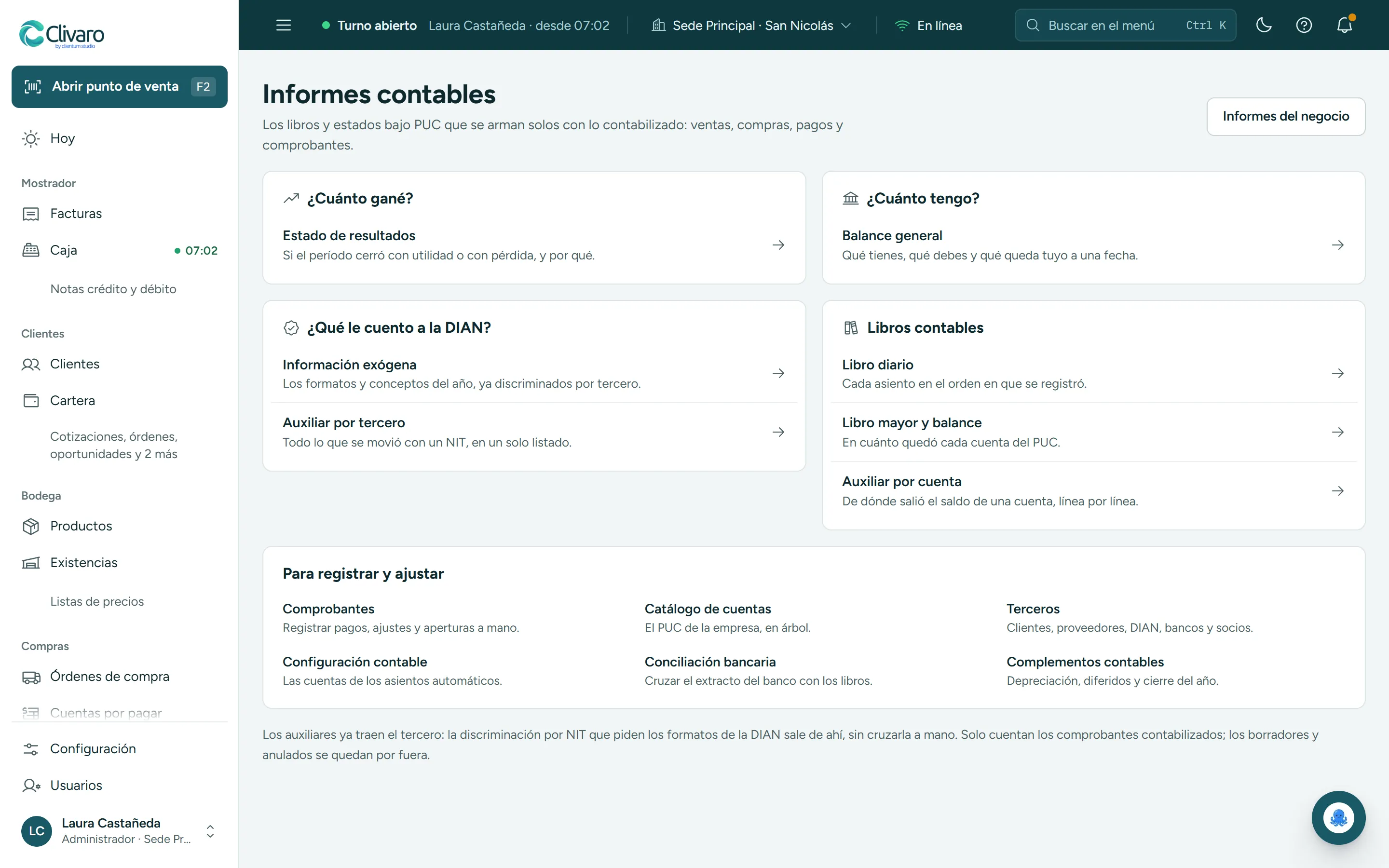
The books put themselves together
The journal, the general ledger and the balance sheet come from what you already recorded: sales, purchases, payments and vouchers.
See full screenshotWhat it looks like inside. The PUC (Colombia’s standard chart of accounts) comes preloaded, and every sale, purchase, payment and payroll run posts its entry. The books, the statements (under the PUC or IFRS for SMEs, known as NIIF para Pymes) and the exógena report come from there.
What you report to the DIAN
Income statement, exógena (Colombia’s annual third-party report) and subsidiary ledgers by third party, already broken down by NIT (tax ID).
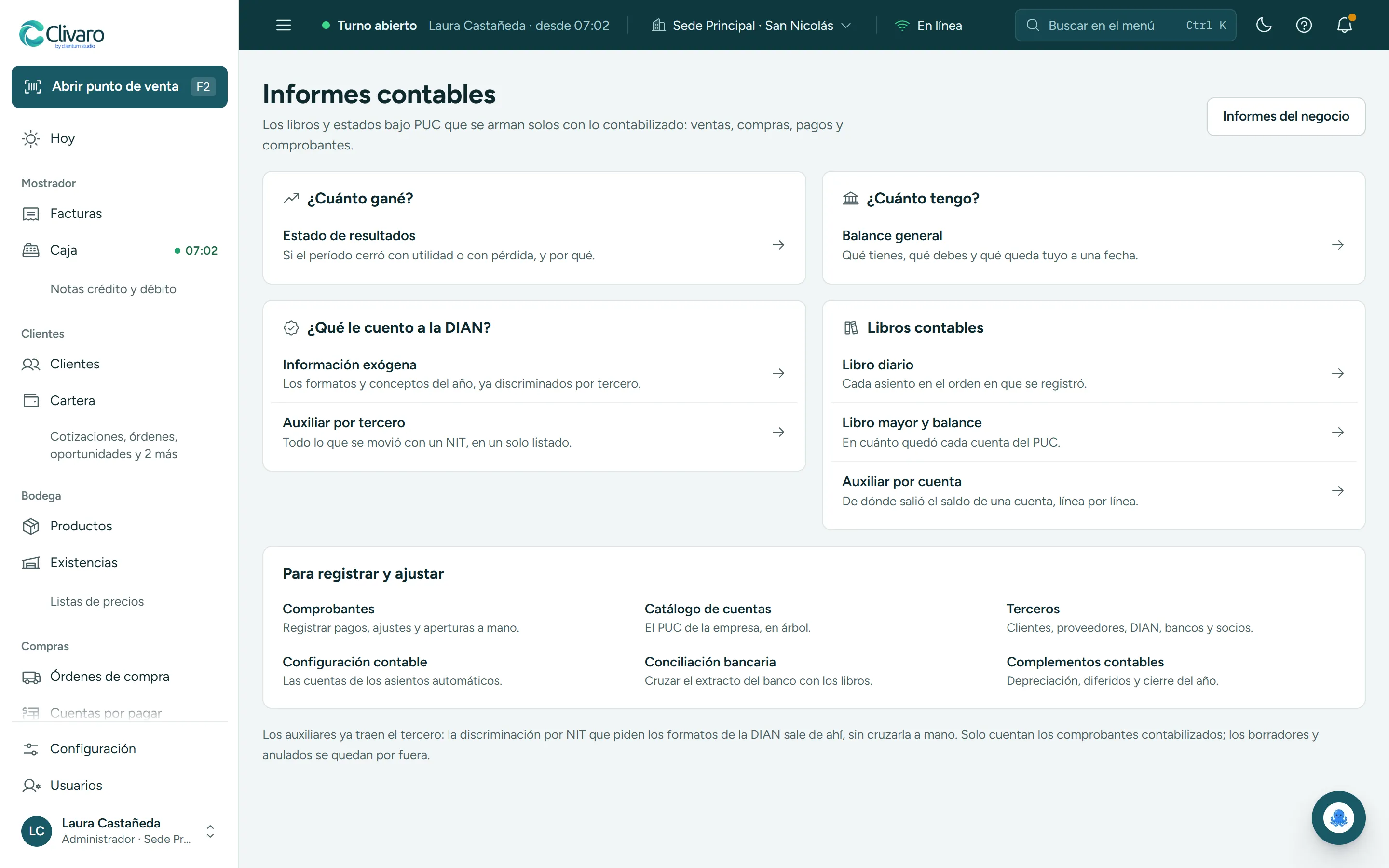
The books put themselves together
Journal, general ledger and balance sheet from what you’ve already recorded.
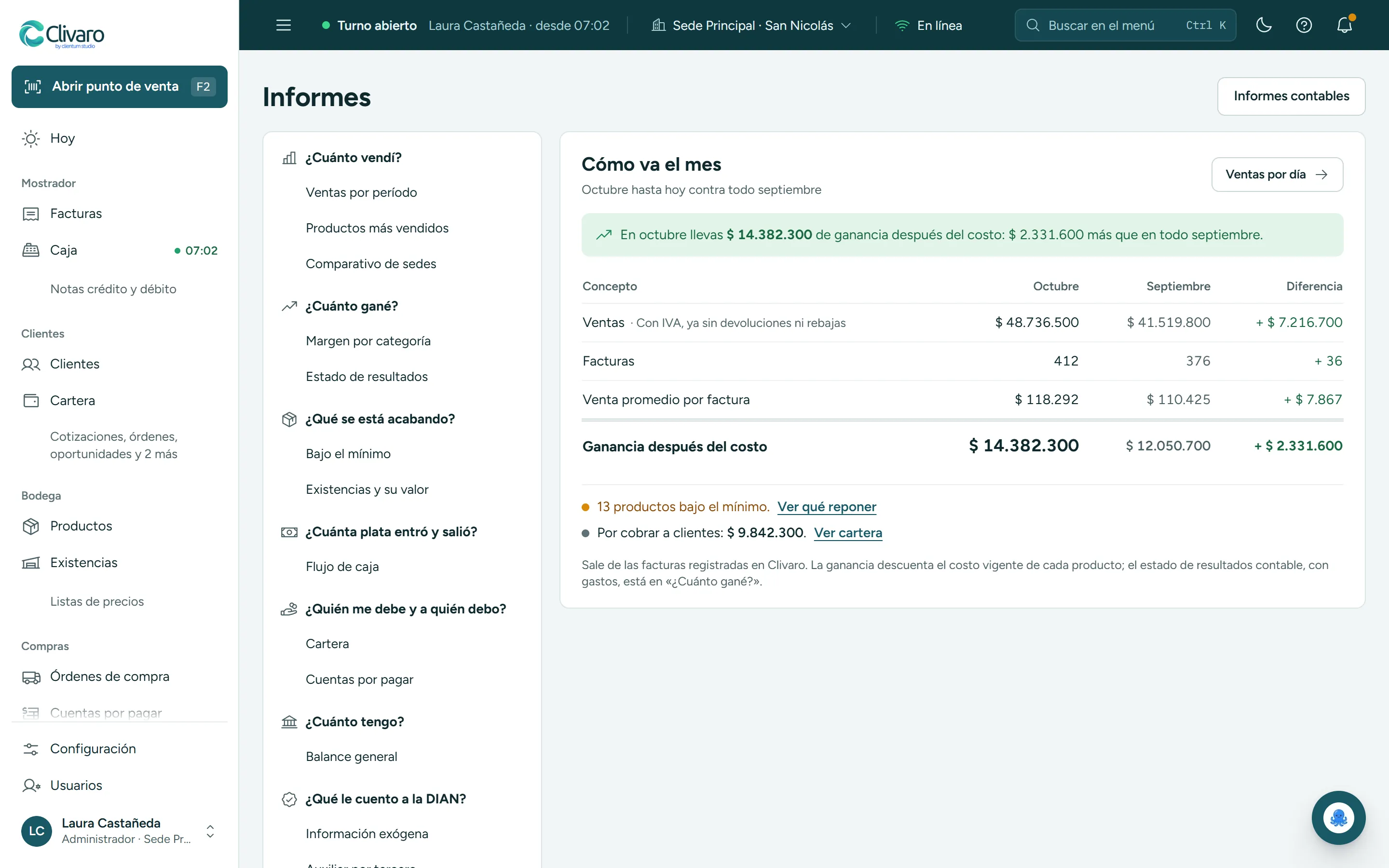
How the month is going
Sales, invoices and profit compared with the previous month, with the difference.
Works with

Exógena for the DIAN
The year’s formats and concepts, already broken down by third party.

Books and statements
Journal, general ledger, balance sheet, income statement and subsidiary ledgers by account and by third party.
- The PUC chart of accounts loaded from day one
- Automatic entries for sales, purchases, payments and payroll
- Journal, general ledger and balance sheet
- Income statement and subsidiary ledgers by account and third party
- IFRS for SMEs financial statements (NIIF para Pymes)
- Exógena reporting
- Bank reconciliation against the bank statement
- Depreciation, deferrals and year-end close
- Electronic payroll
Connects with
What happens here flows into these modules automatically.
Shall we look at it with your business?
We’ll show you accounting with your own products.